What counts as a plumbing emergency? A plumbing emergency is a sudden problem that can harm people, damage property, spread sewage, create fire risk, or stop essential water service. Burst pipes, major leaks, overflowing toilets, unsafe water heaters, and severe backups need fast action. Small leaks may wait, but spreading water should not.
A plumbing crisis can feel upsetting, especially when water moves through floors, walls, or ceilings. Stay calm, stop the water when safe, and keep away from electrical or sewage hazards. Norristown Plumber helps property owners understand urgent plumbing problems and choose a safe next step. In Norristown, quick action can help limit damage.
Table of Contents
- What counts as a plumbing emergency?
- Which plumbing problems require immediate attention?
- What should you do first during a plumbing emergency?
- When is a blocked drain an emergency?
- Is a water heater problem considered a plumbing emergency?
- When should you call an emergency plumber?
- How can you prepare for future plumbing emergencies?
- Frequently Asked Questions
What counts as a plumbing emergency?
A plumbing emergency threatens people, property, or the normal use of a building. It needs quick care when water cannot be controlled, sewage enters the building, or a broken system creates another serious danger. The right response depends on the source, the amount of water, and the risk to people nearby.
How much water is escaping or spreading?
The amount and location of water both matter. A small drip under a sink may not need emergency service if a shutoff valve stops it. A steady stream from a broken supply line can quickly reach floors, drywall, cabinets, and personal items.
Water near outlets, appliances, panels, or light fixtures can cause electric shock. Stay away from wet electrical areas. Leave the building if there is a serious safety concern. The local fire department or utility provider may be needed for a danger outside a plumber’s work.
Could the problem cause immediate property damage or health risks?
A plumbing issue becomes urgent when waiting could make damage or exposure worse. Sewage may contain harmful germs, so it should not be touched without proper protection. A leak inside a wall can also damage wood and insulation before water appears on the surface.
Homeowners, tenants, and property managers should look at nearby rooms and other units. One failed pipe can affect several spaces in a building. A licensed plumber can find the source, stop the flow, and plan a safe plumbing repair.
Which plumbing problems require immediate attention?
Burst pipes, large leaks, sewage backups, and uncontrolled overflows usually need immediate plumbing help. The concern is not only the fixture itself. Water or waste can move through a property faster than expected, causing damage that is harder to clean and repair.
Burst pipes, major leaks, and flooding
A burst pipe can release water behind walls, under floors, or above ceilings. Warning signs include rushing water, a sudden loss of pressure, wet spots, bulging drywall, stains, or water far from a fixture. Close the main water shutoff if you can reach it safely.
Major leaks from toilets, sinks, washing machines, or water heaters also need quick attention. Put a container under a small, controlled leak. Do not climb into unsafe areas or remove covers from electrical equipment. Damage may continue even after the visible water slows.
Burst pipes and hidden leaks can be hard to find without the right tools. A repair plan may depend on the pipe material, the location of the break, the amount of water, and the damage around it. These factors also affect plumbing costs, so the final cost is confirmed on a quote.
Overflowing toilets, sewage backups, and severe drain blockages
Stop an overflowing toilet at once. The toilet shutoff valve is often near the wall or floor behind the fixture. If the bowl contains sewage, keep children and pets away, avoid contact, and do not flush again.
Sewage in a tub, floor drain, or sink may point to a deeper blockage. A severe backup can affect more than one fixture. Toilet Repair can help with running toilets, leaks, clogs, and flush problems. A larger backup may need urgent drain work and a full line check.
What should you do first during a plumbing emergency?
The first steps are simple: protect people, stop the water when safe, and limit damage. Do not take apart a pressurized pipe, enter dirty water, or work near wet electrical equipment. These actions can turn a plumbing problem into a serious injury.
How to shut off the water supply safely
For a fixture leak, turn the small shutoff valve clockwise until it stops. For a larger leak, close the home’s main water valve. It may be near the water meter, where the service line enters the building, or in a utility area.
Some homes have more than one shutoff valve. Tenants should ask the property manager where the main valve is located. Businesses and multi-unit properties may need a building manager to close the right valve without stopping water in other areas.
If the valve will not move, do not force it. A stuck valve can break and release more water. A plumber can handle the valve and repair the failed section safely.
How to limit damage before the plumber arrives
Move furniture, boxes, and electronics away from water when it is safe. Use towels or containers for a small clean-water leak. Never use a household vacuum to collect water near outlets or appliances.
Take clear photos of the affected areas for the owner and insurer. Write down when the issue began, which fixtures are affected, and whether the main valve was closed. These details help the plumber prepare for emergency plumbing service.
If water reaches a ceiling, wall, floor, or electrical area, keep people away. Do not open wet panels or touch switches in a wet space. Safe choices matter more than trying to finish a repair before help arrives.
When is a blocked drain an emergency?
A blocked drain is an emergency when wastewater backs up, several fixtures stop draining, or water threatens the building. A single slow sink may allow time for routine service. Repeated backups can signal a deeper line problem that will not be solved by surface cleaning.
Warning signs of a serious blockage
Watch for these signs of a major drain issue:
- Sewage or dirty water rises from a tub, floor drain, or toilet.
- Several drains back up or empty slowly at the same time.
- Gurgling sounds come from toilets, sinks, or shower drains.
- Water enters one fixture when another fixture is used.
- A foul smell remains after basic cleaning.
A plunger may help with a simple sink or toilet clog. Use it gently and stop if dirty water spreads. Repeated plunging can move contaminated water into another fixture or hide the cause for a short time.
Why chemical drain cleaners may make the problem worse
Chemical drain cleaners can burn skin and eyes and damage some pipes. They may also leave dangerous liquid inside the drain. This creates a risk for anyone who later opens the trap or pipe.
A homeowner can remove a visible hair or food blockage from a removable screen. Cleaning a trap may also be safe when the area is clear and no harsh chemicals are present. Deep, repeated, or sewage-related blockages need professional diagnosis. Drain cleaning may be part of the repair, but the cause should also be found.
One blocked drain may result from buildup near a fixture. Several blocked drains may point to a shared line. The response can depend on the line location, access, pipe condition, and amount of work needed. The final cost is confirmed on a quote rather than guessed from the first symptom.
Is a water heater problem considered a plumbing emergency?
A water heater problem is urgent when the tank leaks, water is scalding, gas is suspected, or the unit creates a fire or electrical danger. A simple loss of hot water may be less urgent, but it still needs timely repair in homes, rentals, and businesses.
Signs of a dangerous or failing water heater
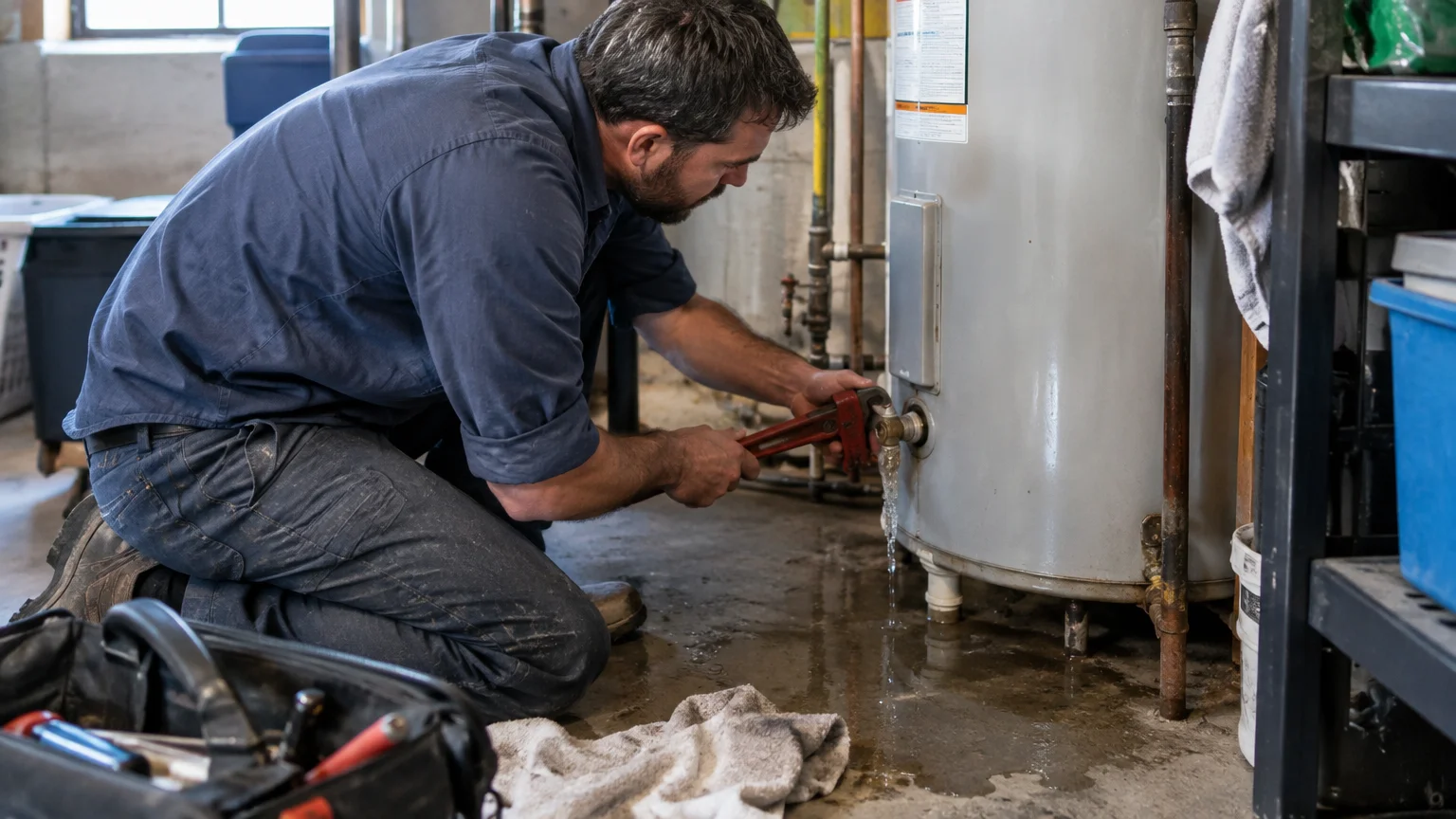
Warning signs include water around the tank, a damaged relief valve, loud banging, a burning smell, smoke, or repeated tripped breakers. A leaking tank can release more water as it keeps filling. Turn off the heater’s water supply if safe. Use the energy shutoff only when it is easy to reach and clearly marked.
Gas odors need special care. Do not light matches, operate switches, or use a phone inside an area that strongly smells of gas. Leave the building and contact the gas utility or emergency services from a safe place. A plumber can handle water-side repairs, but gas emergencies must follow local safety rules.
What to do when there is no hot water
First, check whether the issue affects every hot-water fixture. One cold faucet may have a local mixing valve or fixture problem. No hot water throughout the building may involve the heater, power supply, thermostat, burner, or control system.
Do not remove covers or test live electrical parts. Water Heater Repair can help check tank and tankless systems. The answer depends on the heater type, age, visible damage, and safety condition.
A repair to one small part may be less involved than replacing a damaged tank. A full replacement may require more planning and work. Parts, access, urgency, and damage affect plumbing costs, and the final cost is confirmed on a quote.
When should you call an emergency plumber?
A homeowner should call an emergency plumber when water cannot be stopped, sewage backs up, a hidden leak is suspected, or a plumbing failure threatens the building. Professional help is also needed when a repair involves gas, electricity, pressurized lines, or dirty water.
Situations that need licensed professional help
Call promptly for a burst pipe, flooding, a leak inside a wall, repeated sewage backup, or a leaking water heater. Professional help is also right when the main shutoff will not close, several fixtures fail together, or a repair attempt makes the problem worse.
A homeowner does not always need a professional for a simple task. It may be safe to tighten a loose faucet handle, clear a removable screen, or use a plunger on a basic clog. Stop the task when water spreads, parts break, the cause is unclear, or unsafe conditions appear.
Leaks & Burst Pipes can help with urgent leak checks and pipe repair needs. Norristown Plumber can also help property owners understand whether a problem needs emergency service or routine plumbing repair.
What information to provide when requesting urgent service
Explain what happened, where the water or sewage is located, and whether the main valve is closed. It helps to mention the building type, affected fixtures, visible damage, and any gas, electrical, or contamination concerns.
Tenants should notify the property owner or manager as soon as possible. Business owners should protect customers and staff by closing unsafe areas. Clear details help the plumber bring the right tools and understand the next safe step.
How can you prepare for future plumbing emergencies?
Preparation makes a plumbing emergency easier to manage. Every household, rental, and business should know where the main water shutoff is located. Keep basic supplies in an easy-to-reach place that will not flood.
Essential shutoff locations and emergency supplies
A basic emergency kit may include a bucket, towels, gloves, a flashlight, and an adjustable wrench. Store it away from areas that could flood. Keep contact details for the property manager, water utility, insurance provider, and trusted plumbing company in a safe place.
Property owners should label fixture shutoffs and test them during routine checks. Inspect exposed supply lines, washing machine hoses, water heater connections, and visible pipe joints. Replacing worn parts before failure can lower the chance of sudden damage.
Homeowners should learn about gas safety only through approved guidance. Strong gas odors, hissing sounds, or suspected leaks require leaving the area and contacting the gas utility or emergency services. Never search for a gas leak with a flame.
Key takeaways for homeowners, tenants, and property managers
- Stop water at the fixture or main valve when it is safe.
- Keep people away from sewage, wet electrical areas, and gas hazards.
- Treat spreading water, major backups, and burst pipes as urgent.
- Use simple checks only when the cause and conditions are safe.
- Give the plumber clear details about the leak, damage, and shutoff status.
A plumbing emergency is defined by risk, not by the age or cost of a fixture. Fast action can limit damage, but unsafe repairs can create greater problems. Contact us today for urgent plumbing guidance from Norristown Plumber. Property owners in Norristown can get help reviewing the next safe step.
Frequently Asked Questions
How do you check for a gas leak?
Never use a flame to find a gas leak. A strong gas smell, hissing sound, or suspected leak means everyone should leave the building at once. Do not switch lights or use phones inside. From a safe location, contact the gas utility or emergency services. A plumber can address related water and appliance connections after the area is declared safe.
What should someone do if a toilet keeps running?
A running toilet is usually not an emergency if the shutoff valve works and no water reaches the floor. Turn the valve clockwise to stop the flow. Then check the flapper, float, and handle for simple problems.
If the valve fails, the toilet leaks, or several toilets back up, professional Toilet Repair is appropriate. A running toilet can waste water and may become more serious if the shutoff or tank parts fail.
Why does a toilet keep running after it is flushed?
A toilet may keep running because the flapper does not seal, the float is set wrong, the fill valve is worn, or the handle chain catches. A homeowner can check these parts without forcing them. If the bowl overflows, the shutoff will not work, or water appears around the base, the issue needs prompt plumbing attention.
Is a slow drain an emergency?
A slow drain is not always an emergency. A single sink that drains slowly may respond to basic strainer cleaning or a safe plunger. It becomes urgent when several fixtures drain slowly, sewage rises, foul water returns, or the problem causes flooding. Avoid chemical cleaners when the cause is unknown.
Can a homeowner repair a burst pipe?
A homeowner may close the main water valve and move items away from clean water when safe. Cutting, clamping, or opening a burst pipe is not a safe general repair, especially inside a wall or near electricity. A licensed plumber should inspect the line, stop hidden leaks, and confirm that the damaged section is secure.
If you are unsure what you are dealing with, have the issue checked before it becomes worse. Norristown Plumber provides clear plumbing advice for homeowners, businesses, tenants, and property owners.
If you are not sure what you are dealing with, it is worth having someone look at it before it turns into a bigger job. Get in touch with Norristown Plumber today and we will tell you where you stand.